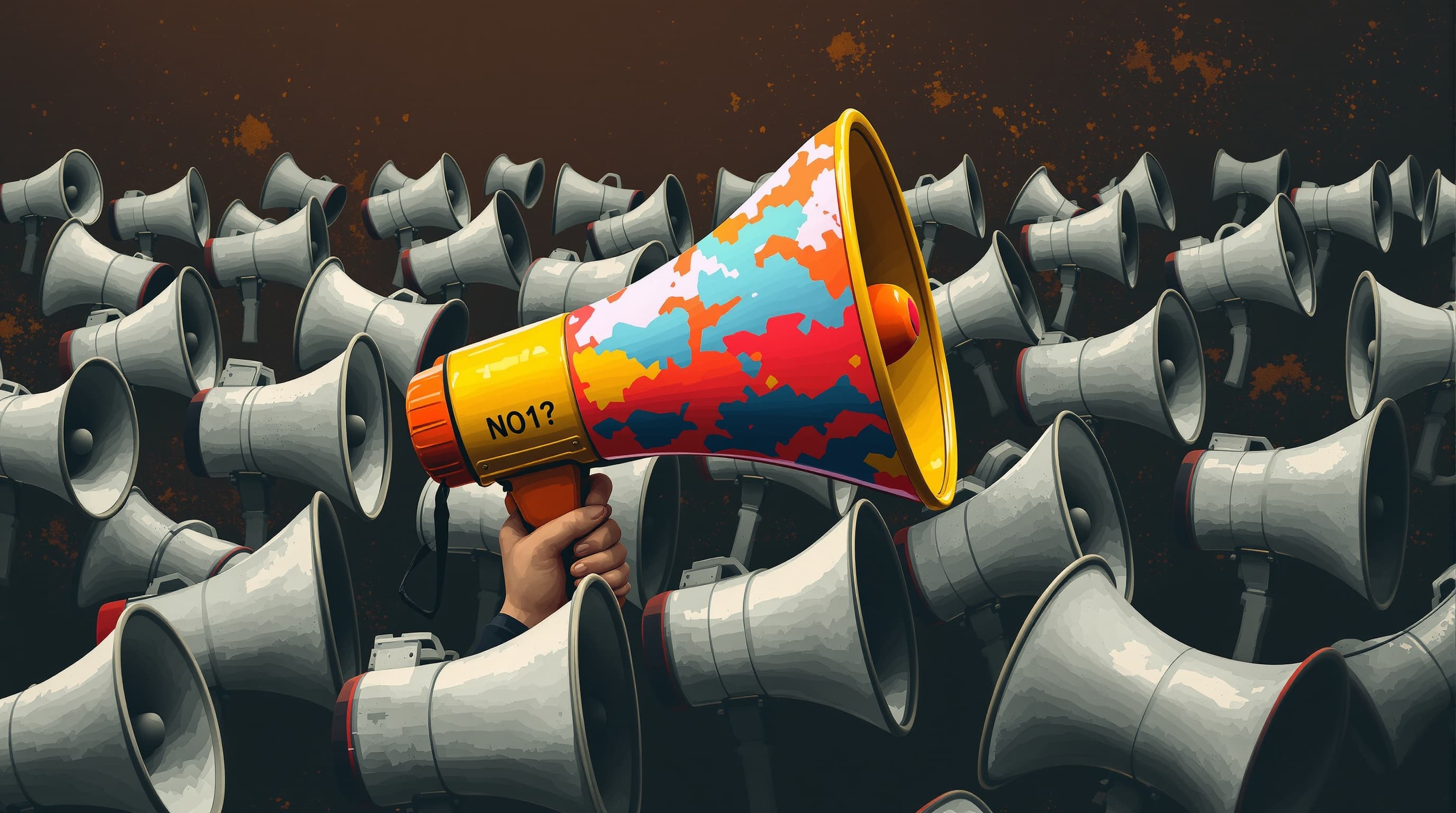
How to Write Product Announcements That Sound Like You Built Them
It's Tuesday. You shipped a feature you spent three weekends on. The caption box is open. You wrote "Excited to announce" and immediately deleted it. Then you tried again and got something that sounds like a 23-year-old growth hacker wrote it on Adderall. Now it's Wednesday and the feature is still unannounced.
This is the part nobody warned you about. The product is the easy part. To write product announcements authentic voice readers actually trust, you need three things: your real voice on the page, the rooms your customers actually sit in, and a draft that doesn't make you cringe before you publish it.
· · ·
Why do most product announcements sound fake?
Because they're written backwards. Most founders open a blank caption box, then try to invent a voice on the spot. The result reads like a press release written by an intern who just discovered LinkedIn.
The second reason: founders copy the tone of the loudest accounts in their feed. If your timeline is full of "🚀 Day 1" threads, your launch post will read like one. You'll sound like every other AI tool because you're literally mimicking every other AI tool.
The third reason is structural. A product announcement isn't really about the product. It's about the gap the product closes for someone specific. If you can't name that person and that gap in one sentence, the post will drift into feature bullets and generic enthusiasm.
The fix is research first, draft second. You write better product announcements when you already know your brand bible, your reader, and the exact phrasing they use to complain about the problem you just solved.
· · ·
What does an authentic voice actually look like on the page?
Authentic voice is just consistency plus specificity. Consistency means the post sounds like the same person who wrote your homepage, your last tweet, and the email you sent a customer at 11pm on a Sunday. Specificity means you use real numbers, real names, and real complaints instead of made-up benefits.
A brand bible captures this so you stop reinventing your voice every Tuesday. It records your tone, your banned words, your sentence rhythm, the way you open and close. Paste your URL into Helm and it reads your site, then writes the brand bible in about 12 seconds. You edit. You keep what's right. You delete what's not. Then every future draft pulls from that file instead of from your last anxious caffeine spike.
Voice isn't a vibe. It's a written contract with yourself about how you sound.
· · ·
How do I find the words my customers actually use?
Go where they complain. Not where marketers say they should be. The rooms that matter for most indie hackers and bootstrapped operators are Reddit, Hacker News, Indie Hackers, and X. Sometimes a niche Discord. Sometimes a subreddit you didn't know existed.
You're not looking for keywords. You're looking for verbatim phrases. "I've been on Day 41 of trying to write a tweet about my launch." "Every AI caption tool spits out the same garbage." "I don't want another dashboard." Those exact strings are gold. Drop them into your announcement and the reader feels seen instead of sold to.
Helm pulls live posts from those four surfaces so you read what people wrote this week, not what a search-term scraper guessed at six months ago. The point is to write product announcements authentic voice readers recognize because you literally lifted their phrasing.
What to collect before drafting
Grab three things from those rooms. One: the exact pain phrase customers use. Two: the workaround they hate but tolerate. Three: the objection they raise when someone recommends a tool like yours. If you have those three on the page next to your draft, the announcement writes itself.
· · ·
What's the 5-step process to write a product announcement that doesn't sound like AI?
Here's the order. Don't skip steps. Skipping is why your last post sounded like a chatbot wrote it.
- Pull your brand bible. Open the file. Re-read your tone rules, your banned words, your sentence rhythm. If you don't have one, paste your URL into Helm and get one in 12 seconds.
- Collect three verbatim quotes from the rooms your customers sit in. Reddit threads. Hacker News comments. X replies. Indie Hackers posts. Copy them into a doc next to your draft.
- Write the stuck moment first. Open with the reader's exact frustration before naming the product. One or two sentences. No setup. No "I'm thrilled to share."
- Name the gap your feature closes in one declarative line. Then describe the outcome in one more. Two beats. Setup. Payoff.
- Cut every word that could appear in any other founder's launch post. Generic praise. Buzzwords. Empty intensifiers. If a competitor could paste the line into their announcement and it would still work, delete it.
That's the loop. Brand. Listening. Stuck moment. Gap. Cut. You can run it in 30 minutes once the brand bible exists.
· · ·
Generic launch post vs. authentic product announcement: what's the difference?
| Generic launch post | Authentic product announcement |
|---|---|
| Opens with "Excited to announce" or a rocket emoji | Opens with the reader's stuck moment in their own words |
| Lists features in bullet points | Names one gap and the outcome of closing it |
| Uses words like robust, powerful, intuitive | Uses real numbers: "12 seconds," "17 of 50 spots," "Day 41" |
| Sounds like every other founder's launch | Sounds like the person who built the thing |
| Written in one sitting from a blank box | Written from a brand bible plus three verbatim customer quotes |
| Asks for likes and retweets | Ends with a specific offer or a takeaway |
The right column takes longer the first time. The second time it takes 20 minutes. By the tenth announcement, you have a system instead of a panic.
· · ·
How long should a product announcement be?
As long as the gap requires. A single-feature ship can be three sentences on X. A bigger release deserves a longer post on your blog with the full story: what was broken, what you built, what changes for the reader on Monday morning. Don't pad. Don't truncate.
The wrong question is "how long." The right question is "did I name the stuck moment, the gap, and the outcome?" If yes, you're done. Add a line about who it's for and ship it.
· · ·
What should I never put in a product announcement?
No "thrilled to announce." No rocket emojis. No "we're on a mission to." No three-paragraph backstory about your founder journey. No vague benefit claims with no number attached. No feature bullets that read like a changelog dressed up in adjectives.
Also skip the false humility. "Just a small update" when it's a major feature is its own kind of fake. Say what you built. Say who it's for. Say what changes.
· · ·
How do I know if my announcement actually landed?
Reply quality, not like count. If five strangers reply with a specific question about how the feature works, the post landed. If 50 people liked it and nobody asked anything, it was wallpaper. Likes are vanity. Questions are signal.
The other tell: did anyone quote a line back at you? When a reader screenshots your post and shares it with a comment, you wrote something that felt like them. That's the bar.
· · ·
FAQ
How do I write a product announcement when I'm not a writer?
You don't need to be a writer. You need a brand bible, three verbatim customer quotes, and the 5-step loop above. The brand bible carries the voice. The quotes carry the specificity. You're assembling, not composing from scratch.
What's the best platform to post a product announcement?
The platform where your customers already complain about the problem. For indie hackers and technical founders that's usually X, Hacker News, and Indie Hackers. For DTC operators it's often a subreddit plus your email list. Helm covers 7 channels out of the box so you draft once and adapt per surface.
Should I use AI to write my product announcement?
Yes for drafts, no for final voice. Generic AI gives you generic output because it has no brand bible and no live listening data. Feed it your voice rules and real customer phrasing, and the draft gets usable. Then you cut.
How often should I post product announcements?
When you ship something that closes a real gap for a real customer. Not on a content calendar. Founders who post every minor tweak as a launch train their audience to ignore launches.
What if my product is boring to announce?
The product isn't boring. The framing is. Re-read what customers said in their complaints. The thing you think is boring is probably the thing they're losing sleep over. Lead with their stuck moment, not your feature.
How do I keep my voice consistent across multiple announcements?
Write the brand bible once. Reference it every draft. Helm reviews your marketing across 8 strategy dimensions so you also know if your voice is drifting or your cadence is off, and what to fix next.
Can I reuse the same announcement across X, LinkedIn, and email?
Reuse the spine. Rewrite the rhythm per surface. X wants short lines and a hook. LinkedIn tolerates a longer setup. Email lets you tell the full story. Same gap, same outcome, three different rhythms.
· · ·
First 50 founders get Helm free. 17 of 50 spots filled. no_card_needed · works_from_any_URL · open_in_30s. Paste your URL. Get your brand bible in 12 seconds. Write the next announcement in your own voice.